
Restorative justice
A justice approach focused on repairing harm through dialogue.

Cummings Properties · CC BY 2.0
Restorative justice is a method or ethos of criminal justice and youth justice that seeks to repair harm after crime or violence by empowering the harmed and harming parties to participate in dialogue. It aims to ensure offenders take responsibility, understand the harm they have caused, and have an opportunity to redeem themselves, while giving victims an active role to reduce feelings of anxiety, unfairness, and powerlessness. Restorative justice programmes are complementary to the criminal justice system, including retributive justice, and some argue that certain cases constitute an alternative punishment.
- field
- Criminology
- known_for
- Repairing harm through dialogue between victims and offenders
- key_practices
- Victim-offender mediation, family group conferencing, circles
- principles
- Power sharing, equality, dignity, respect
Lore & Background
The phrase 'restorative justice' has appeared in written sources since the first half of the nineteenth century, and it has been argued that the term was coined by Aristotle, who said it aims to restore goods to individuals. Precursors to restorative justice are found in indigenous groups, including the Indigenous people of Canada and the United States, and the Maori of New Zealand. According to Howard Zehr, restorative justice represents a validation of values and practices characteristic of many indigenous groups, whose traditions were often discounted and repressed by western colonial powers. In New Zealand, the Maori had a system called Utu that protected individuals, social stability, and the integrity of the group. The title refers to providing an alternative framework for thinking about crime and justice.
Reader's Guide
Restorative justice has rendered positive results for both victims and offenders through academic assessment. Proponents argue that most studies suggest it makes offenders less likely to re-offend. Its use has seen worldwide growth since the 1990s. The literature summarizes restorative justice direct practices as victim-offender mediation, family group conferencing, and circles. Their main differences lie in the number and roles of participants. Indirect practices include video or file exchanges, letter writing, or passing messages through a facilitator. The overall goal is for participants to share their experience, discuss who was harmed and how, and create a consensus for what the offender can do to repair the harm. Restorative justice differs from traditional criminal justice in the guiding questions it asks. According to Howard Zehr, restorative justice asks: Who has been hurt? What are their needs? Whose obligations are these? What are the causes? Who has a stake? What is the appropriate process? In contrast, traditional criminal justice asks: What laws have been broken? Who did it? What do the offender(s) deserve? Others argue there are similarities and that some cases constitute punishment.
Did You Know?
- The term 'restorative justice' may have been coined by Aristotle, who said it aims to restore goods to individuals.
- Precursors include indigenous systems such as the Maori's Utu and practices of Indigenous peoples of Canada and the United States.
Gallery
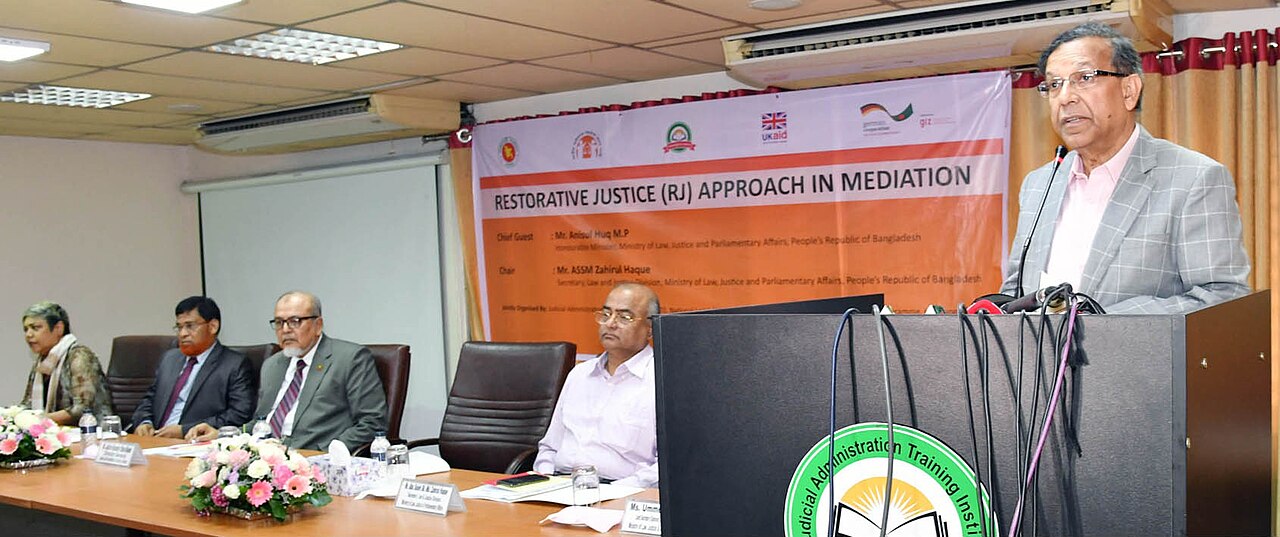



Frequently Asked Questions
What is Restorative justice?
Restorative justice is a criminology-based approach to criminal and youth justice that centers on repairing the harm caused by a crime rather than solely punishing the offender. It brings harmed and harming parties into direct dialogue so both can actively shape the outcome.
What are the main practices used in Restorative justice?
The three core practices are victim-offender mediation, family group conferencing, and circles. Each creates a structured space where all affected parties can speak, listen, and collaboratively decide how to make things right.
Does Restorative justice replace the traditional criminal justice system?
No—restorative justice programmes are designed to complement, not replace, retributive justice and other elements of the criminal justice system. However, some advocates argue that in certain cases it can serve as a full alternative to prosecution.
What principles underpin Restorative justice?
The approach is grounded in four guiding principles: power sharing, equality, dignity, and respect. These ensure that no single party dominates the process and that every participant is treated as a full stakeholder in the outcome.
Why is Restorative justice considered important in criminology?
It shifts the focus from punishment to accountability and healing, giving victims an active voice to counter feelings of anxiety, unfairness, and powerlessness. At the same time, it offers offenders a meaningful path to take responsibility, understand the harm they caused, and redeem themselves.
More in Law Enforcement & Legal Procedures 1-24
Spotted an error? Know more?
This is a living reference — every entry is fact-audited, and reader corrections feed straight into our audit queue. Suggest an edit · See this site's audit record